
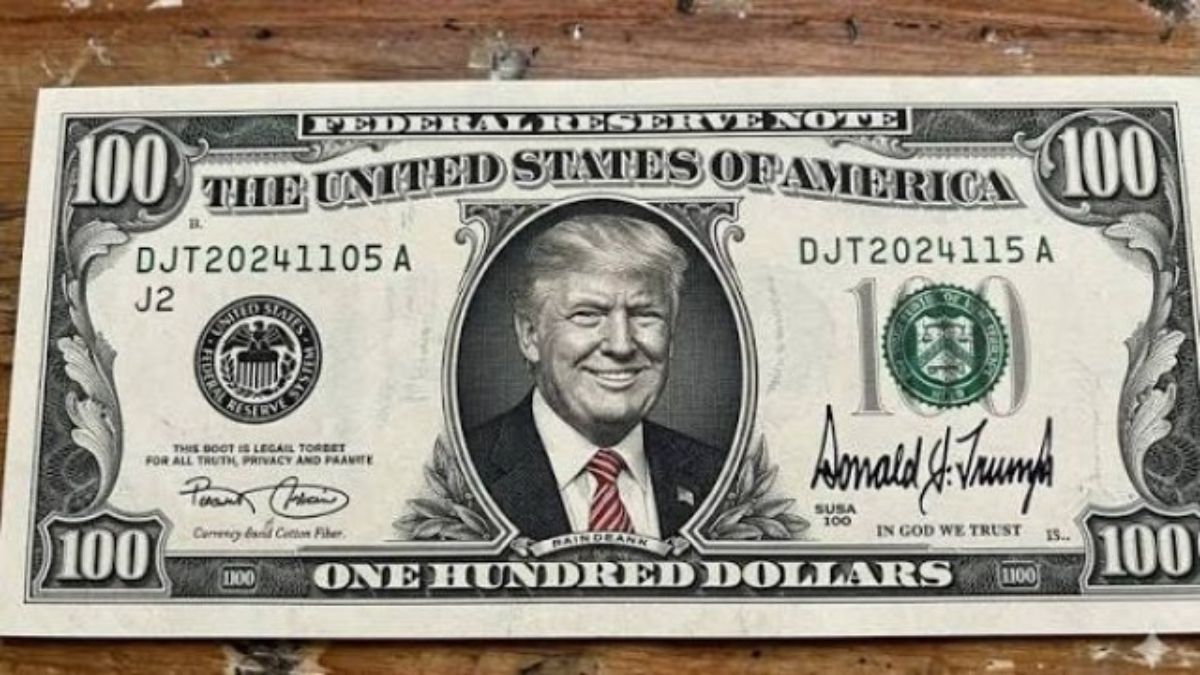
The idea of a sitting U.S. president placing his signature on the nation’s currency has stirred both fascination and criticism, and now that possibility is becoming reality.
According to recent announcements from the Treasury Department, Donald Trump is set to have his signature appear on U.S. dollar bills later this year. If implemented as described, it would mark a first in American history.
For more than a century, U.S. banknotes have carried the signatures of two officials: the Treasury secretary and the treasurer of the United States.
This long-standing tradition dates back to the Civil War era, when Abraham Lincoln authorized the issuance of paper currency. Since 1914, the pairing of those two signatures has been a consistent feature on every bill Americans use daily.
A historic shift tied to a symbolic milestone
The Treasury’s decision is being framed as part of the country’s upcoming 250th anniversary celebration in 2026.
Officials argue that the move is meant to commemorate what they describe as a defining moment in U.S. history and leadership. Treasury Secretary Scott Bessent has publicly supported the change, calling it a fitting tribute during a milestone year.
Under the plan, Trump’s signature would appear alongside Bessent’s, replacing the traditional placement of the U.S. treasurer’s name. While it may sound like a small design tweak, the symbolism runs deep.
Currency is one of the most widely circulated representations of national identity, and even subtle changes can carry significant meaning.
This is not the first time Trump’s name has appeared on official financial documents. During the COVID-19 pandemic, stimulus checks sent to millions of Americans included his signature, a move that also sparked debate at the time.
Since returning to office, he has continued efforts to leave a visible imprint on public institutions, from proposing coins bearing his likeness to renaming prominent cultural sites.
Still, it remains unclear whether the new signature will appear across all denominations or be limited to specific notes. The Treasury has not provided full details, leaving room for speculation about how widespread the change will be.
Praise, backlash, and questions about legacy
Supporters of the move see it as a recognition of Trump’s political and economic agenda. Allies argue that his leadership deserves a place in the nation’s symbolic landscape, especially during a major anniversary.
Some officials have gone as far as to describe the decision as a long-overdue acknowledgment of what they consider a transformative period in U.S. governance.
Critics, however, view the change very differently. Opponents say placing a sitting president’s signature on currency risks blurring the line between national institutions and personal branding.
Democratic Senator Jeanne Shaheen criticized the move as unnecessary and inconsistent with American traditions, suggesting that national milestones should highlight broader historical contributions rather than a single individual.
Economic experts have also questioned the practical value of the decision. Douglas Holtz-Eakin, a former Republican policy adviser, noted that cash usage continues to decline in an increasingly digital economy.
From that perspective, altering paper currency may have a limited real-world impact beyond symbolism.
There is also a historical and collector angle to consider. Former Bureau of Engraving and Printing director Larry Felix pointed out that such an unusual change could make these bills desirable among collectors.
If future administrations reverse the decision, notes bearing Trump’s signature could become rare items over time.
Ultimately, the move highlights an ongoing debate about how leaders shape national identity and legacy.
Whether seen as a historic tribute or a controversial branding effort, the addition of a sitting president’s signature to U.S. currency ensures one thing: it will not go unnoticed.